
Do You Need a Carport Permit in California?
Learn when a carport permit may be required in California. Review setbacks, site preparation, local approval factors, and next steps.
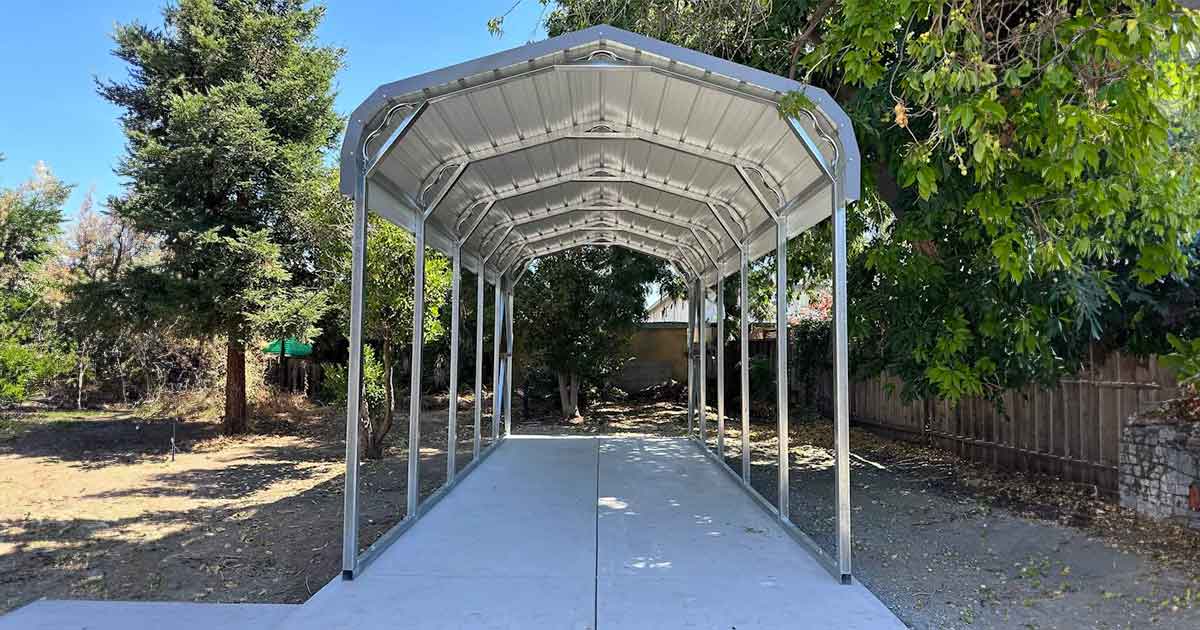
Permit, Setback & Engineering Guide
Permit and placement rules are local. Across Northern California, the applicable city or county may review the structure size, placement, foundation, enclosure, intended use, wind or snow loads, zoning, lot coverage, fire separation, drainage, and other site conditions. Some projects also have HOA requirements. Confirm the local rules before ordering or installation.
1. Plans & Engineering Packages
Engineering is conditional, not included with every building. Norcal Carports may provide planning guidance and coordinate available engineering information or a quote from A&A Engineering when the city, county, HOA, or inspector requests documentation.
- Generic Plans: Planning documents for a standard configuration. They do not determine whether a local jurisdiction will approve the project.
- Site-Specific Plans: Documents prepared for the project address and ordered configuration when the jurisdiction or reviewer requires them.
- Cost: Engineering and calculations are conditional project costs and are not automatically included in the base structure price.
- Timeline: Permit-related engineering pricing may take 1 to 3 business days. Document preparation and review time depend on the project and engineer.
2. Customer Responsibilities
To ensure a smooth project, please be aware of the following:
- Permit Fees: The price of your building covers the structure and installation only. All city or county permit application fees are the direct responsibility of the customer.
- Zoning & Setbacks: You are responsible for confirming local zoning laws, height restrictions, property lines, easements, and setbacks with the applicable jurisdiction.
- The Permit Process: The customer or their contractor is responsible for filing permit applications and coordinating required inspections. The local city or county makes approval decisions.
3. Street, Fence, and Installation Clearance
There is no single Northern California setback number from a street or neighboring fence. The local jurisdiction determines the required front, side, or rear setback and whether it is measured from a property line, right-of-way, easement, or another reference.
- Street placement: Confirm the front setback, right-of-way reference, height limits, lot coverage, and any driveway or visibility rules with the local building or planning department.
- Fence placement: A fence is not always the legal property line. Verify the property line before measuring the building footprint, then account for the full roofline, posts, anchors, drainage, and easements.
- Installation workspace: Plan for a minimum of 3 feet of clear workspace around the structure for delivery and installation. This is an installation requirement, not a legal setback.
- Regional conditions: Central Valley heat, Delta and I-80 wind exposure, compact Bay Area lots, and North State or foothill snow, slopes, trees, drainage, and access can change the planning questions that need to be reviewed.
4. Foundation & Concrete Disclaimer
While we pride ourselves on building world-class structures, our expertise is in steel assembly.
- No Foundation Work: Norcal Carports does NOT perform foundation or concrete work.
- Slab Requirements: If you are installing on a concrete pad, it must be level and meet the thickness requirements specified in your engineering plans.
- Anchoring: We provide standard anchoring for dirt, gravel, or concrete, but specialized foundation requirements mandated by your permit are the customer's responsibility.
Before finalizing a permit path, compare the carport foundation requirements for the selected surface, review carport anchoring options for uplift and surface conditions, and confirm whether carport engineering plans or carport bracing requirements may be requested for the site.
5. Permit-Required Upgrades
Depending on your local "Snow Load" or "Wind Load" requirements (especially in the Sierra Foothills or coastal areas), your permit may require structural upgrades such as:
- Heavier 12-Gauge Steel Framing
- Additional Bracing
- Closer Bow Spacing (e.g., 4' on center vs. 5')
Related Permit Information
Permit planning often changes when a project becomes enclosed, tall, or wind-rated. Review metal garages for enclosed-building decisions, then compare the 12 x 20 x 10 vertical roof garage as a compact example of doors, walls, and vertical roof planning. For tall open coverage, the 16 x 40 x 12 vertical RV carport and 22 x 20 x 8 partially enclosed vertical carport are useful references before checking local approval requirements.
Advice: Always check with your local building department before placing your order to avoid costly changes or permit rejections.

Michael Ruiz
Founder & Steel Structures Expert Northern California
Michael Ruiz started Norcal Carports to help customers compare steel-building options, prepare accurate order details, and coordinate delivery and installation with the manufacturer.
Buyer Path
What to Compare Next
This keeps the path moving from research into product fit, local requirements, and quote readiness.
Foundation
Foundation Requirements
Understand slab, footing, edge-distance, and anchoring issues before permitting.
Engineering
Bracing Gallery
See structural reinforcement details that can matter for wind, snow, and larger builds.
Product
Wide Span Metal Buildings
Compare a higher-value structure type where engineering and permits often matter early.
Local
Metal Carports in Sacramento
Review Sacramento metal carport sizing, site-access, and local planning considerations.
Quote
Request a Project Quote
Send city, county, structure type, dimensions, surface, and any permit or setback questions. Final requirements remain with the applicable jurisdiction.
Expert Engineering Insight
"When a project or local jurisdiction requires engineering, the ordered configuration can be reviewed for the applicable wind, snow, anchoring, and site criteria before manufacturing."
Other Permits & Property Requirements Resources
Quote Readiness
Review the Project Requirements
Use this guide to narrow the project details, then send the details that let us quote the real site instead of a generic package.