


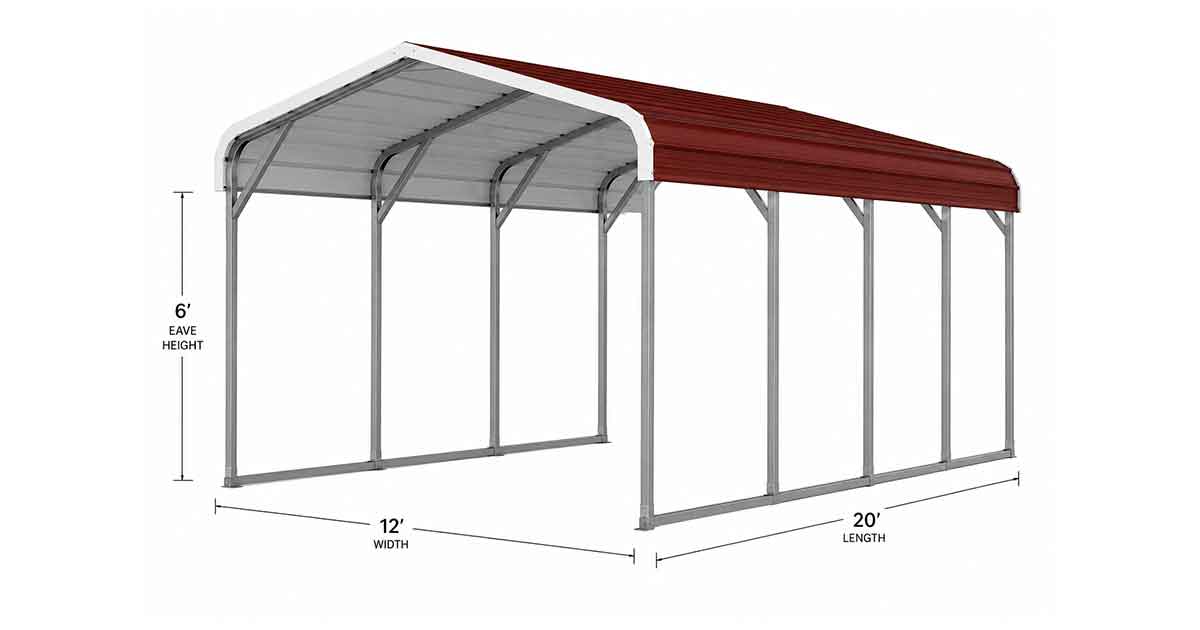
Open Carport
12' × 20' × 6'
Standard · Open sides and ends
A compact open-sided steel carport example sized for straightforward vehicle coverage, driveway parking, and everyday weather protection. Frame: 14-Gauge.
Compare rounded, boxed-eave, and vertical-roof carports. Start with a saved example, then check size, enclosure, frame gauge, and price against what you need to cover.
For local sizing, access, and placement considerations, explore our metal carports in Sacramento, CA.
Open Carport
Standard · Open sides and ends
A compact open-sided steel carport example sized for straightforward vehicle coverage, driveway parking, and everyday weather protection. Frame: 14-Gauge.
One real before-and-after view makes the footprint and finished covered space easier to picture. This is a representative carport project transformation.
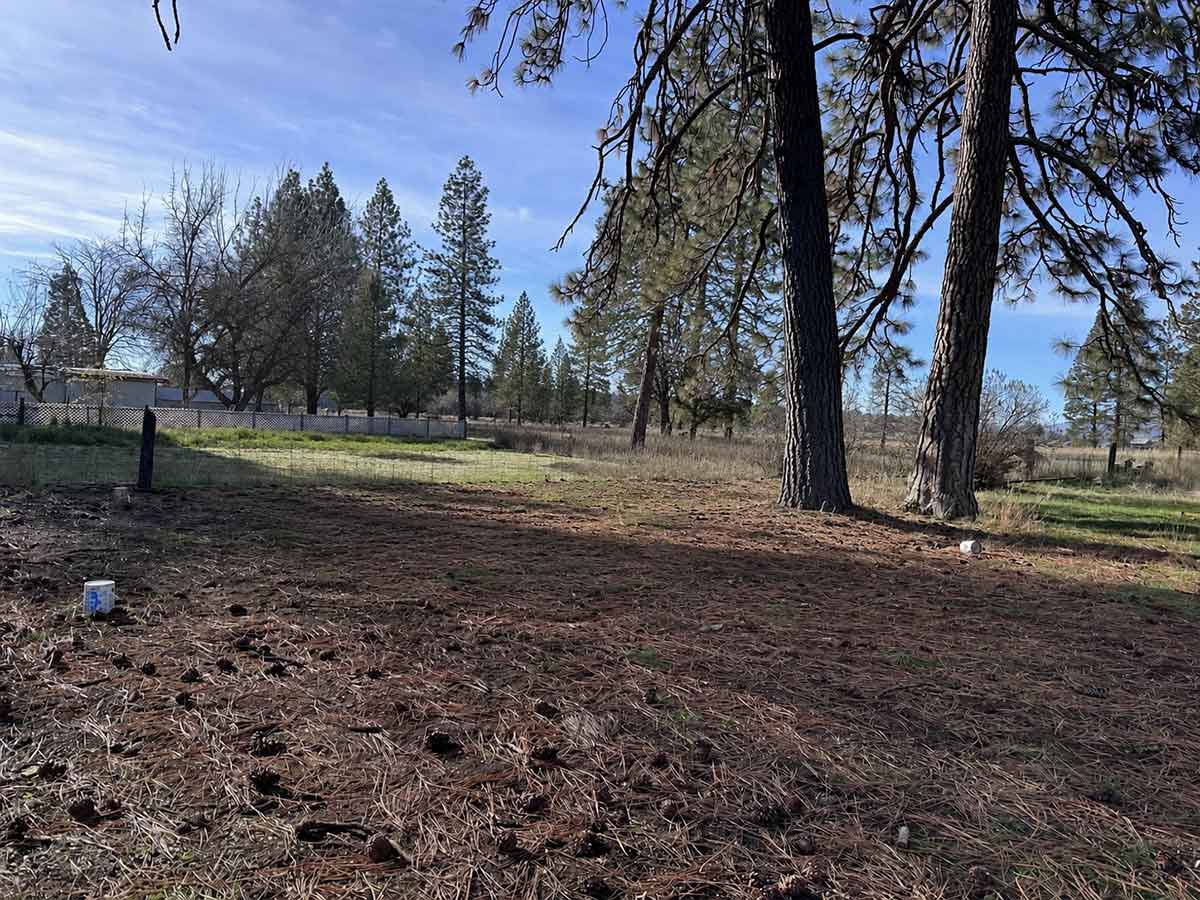 Before
Open site
The footprint before the structure is installed.
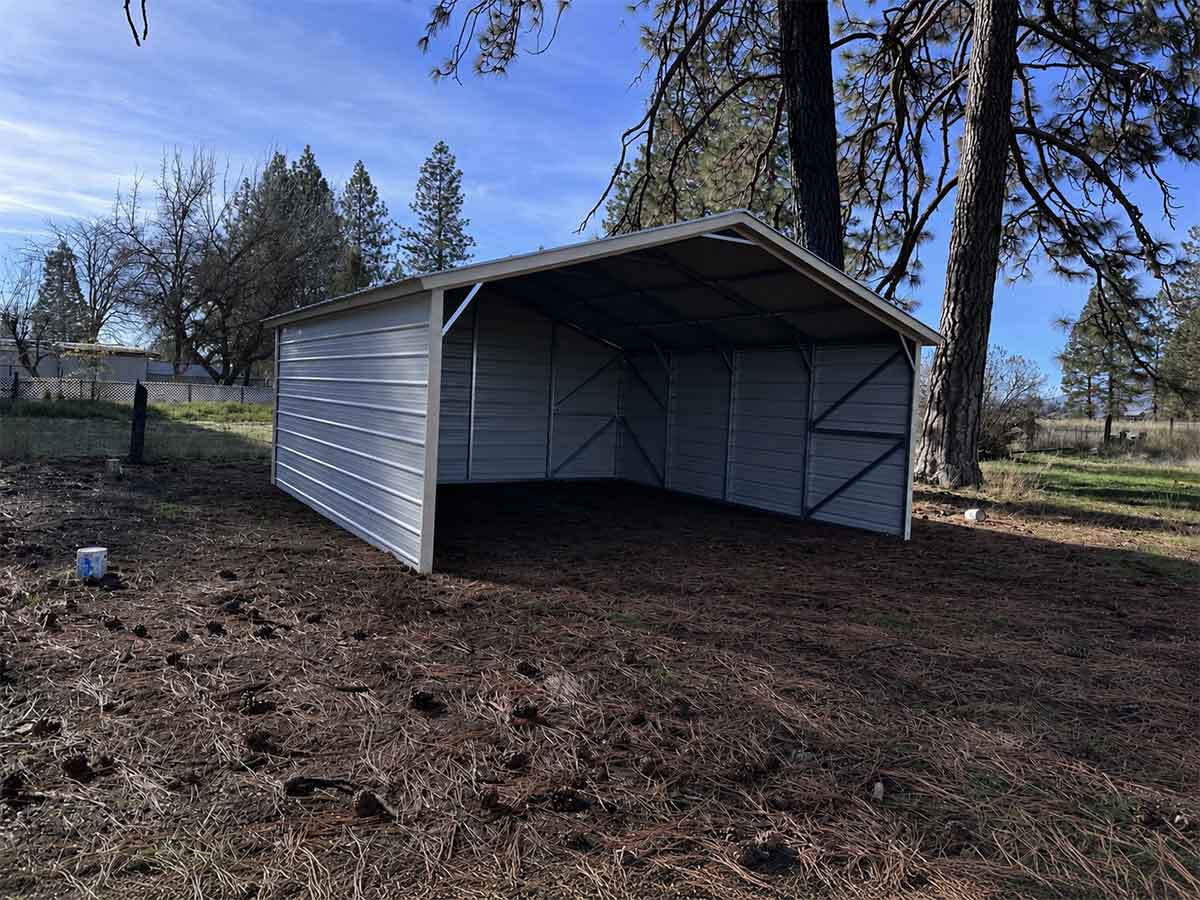 After installation
Covered space
The finished structure using the same footprint.
Compare real vehicle, RV, boat, and equipment coverage before choosing a roof style.
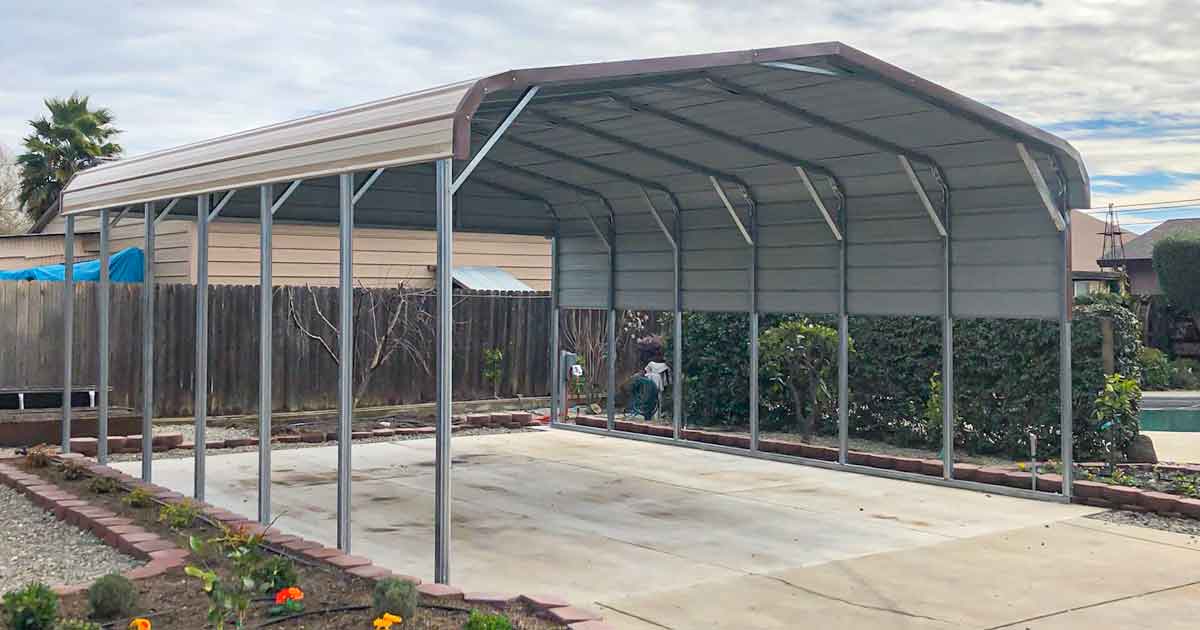
Straightforward vehicle and light equipment coverage
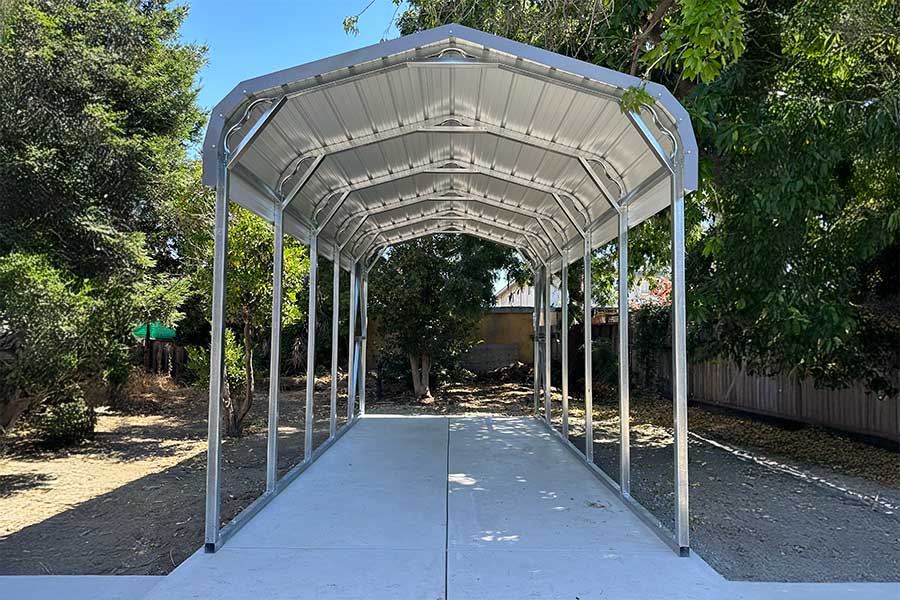
Driveway vehicle coverage with open access
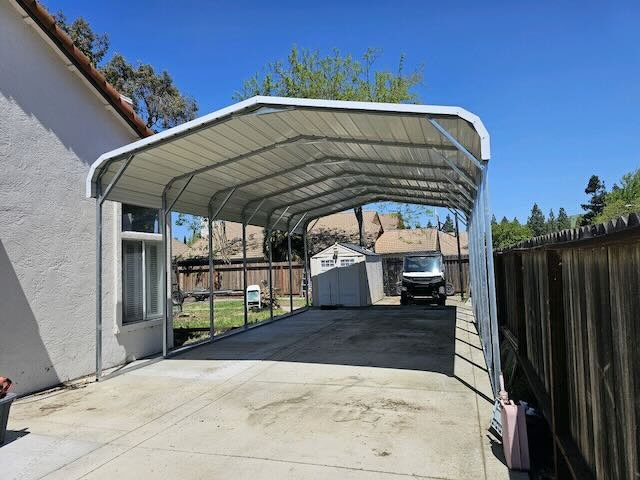
Everyday vehicle coverage and driveway parking
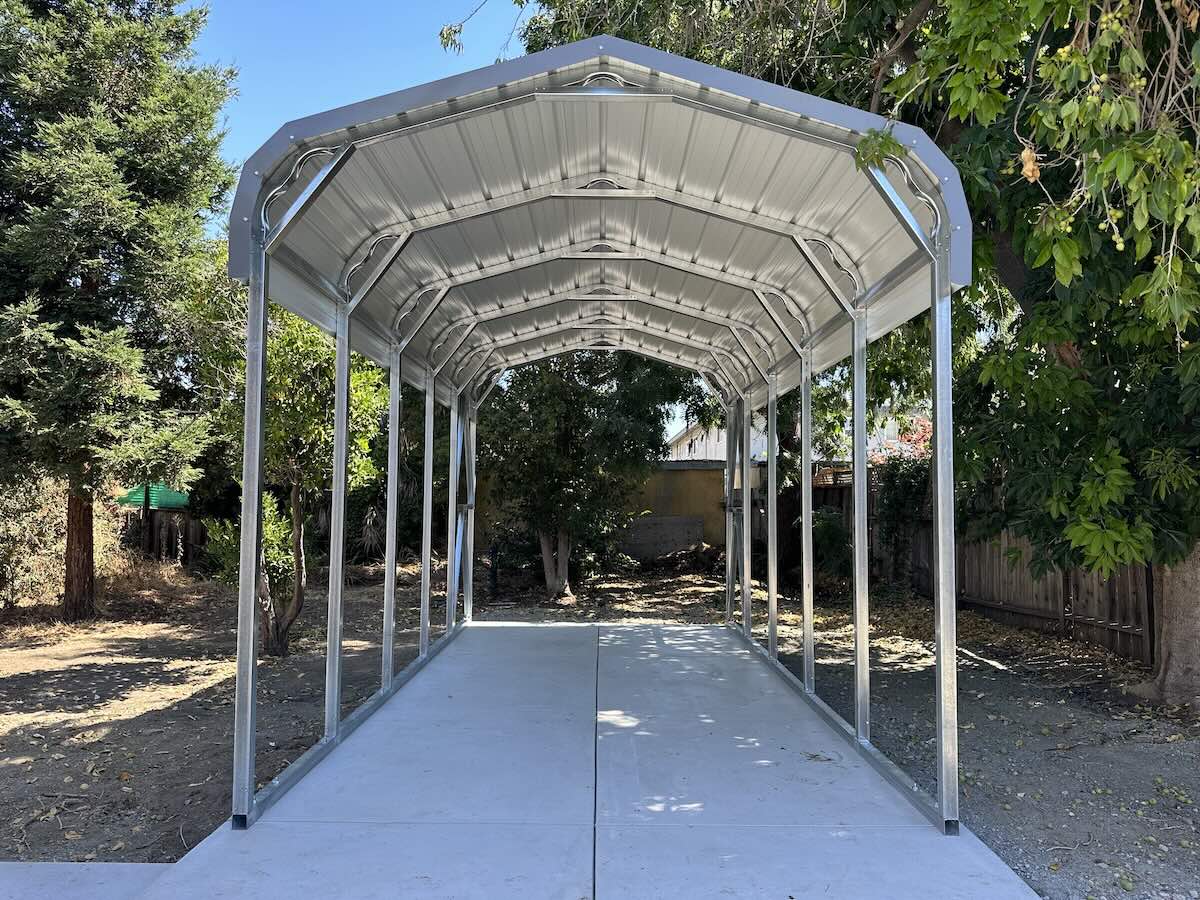
Driveway vehicle coverage with open access
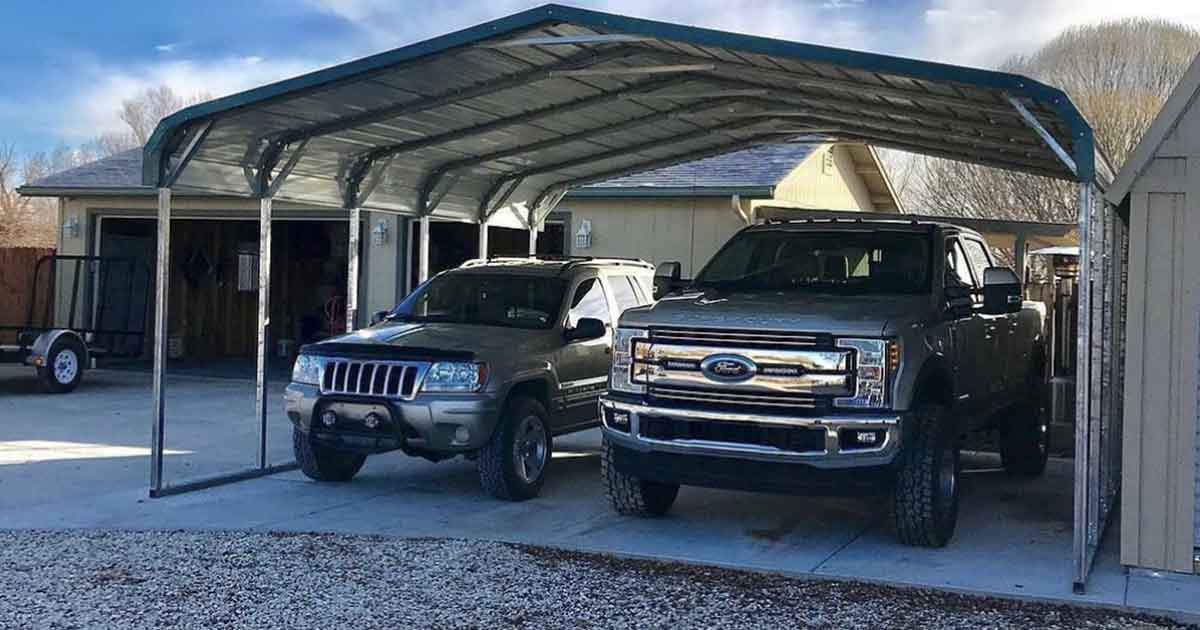
Multi-vehicle driveway coverage
Compare three roof and frame packages by profile, panel direction, saved example, and gauge. Choose the combination that fits what you need to cover and the conditions at your site.
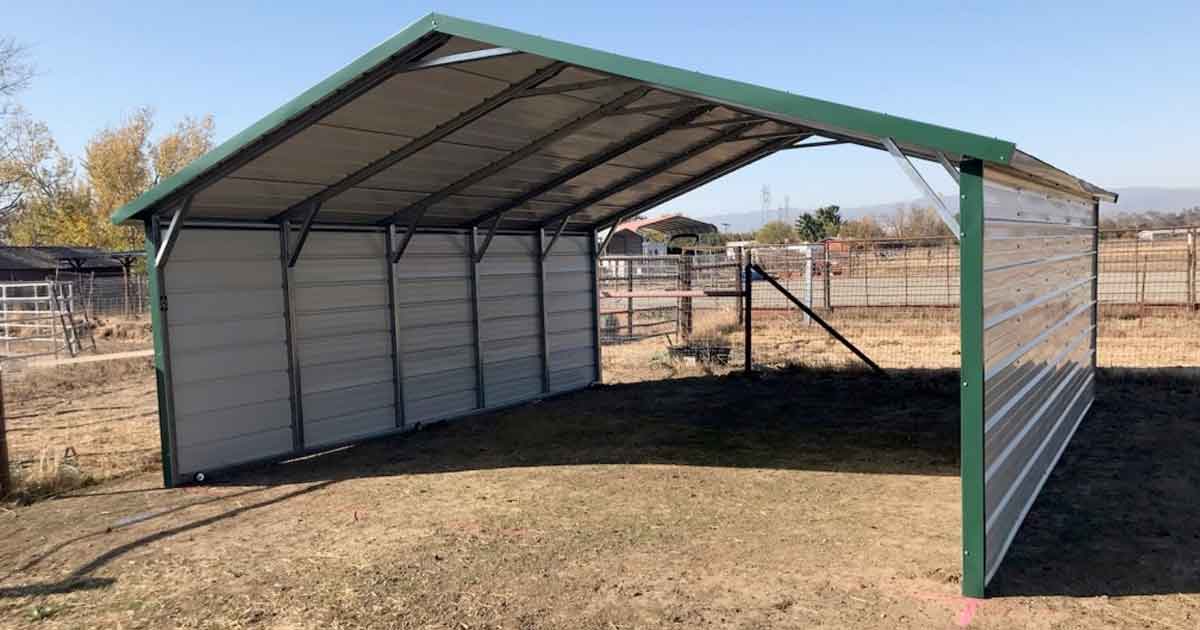
Peaked roof · horizontal panels
A peaked roofline with boxed eaves and horizontal panels. It gives an open-sided carport a more home-like profile while keeping the panel direction horizontal.
A-frame peak with horizontal roof panels running front-to-back and finished boxed eaves.
12-gauge framing upgrade; confirm the selected package in the quote · Gable ends and side panels based on the coverage you need · Anchors selected for the installation surface · Roof and trim color choices
Rounded roof · everyday coverage
A regular-roof carport with a rounded profile for straightforward vehicle, trailer, and equipment coverage. Compare the saved size and price against the clearance and site conditions you need.
A rounded roofline with horizontal roof panels running along the building length.
12-gauge framing upgrade; confirm the selected package in the quote · Partial or full side and end coverage by configuration · Anchors selected for the installation surface · Roof and trim color choices
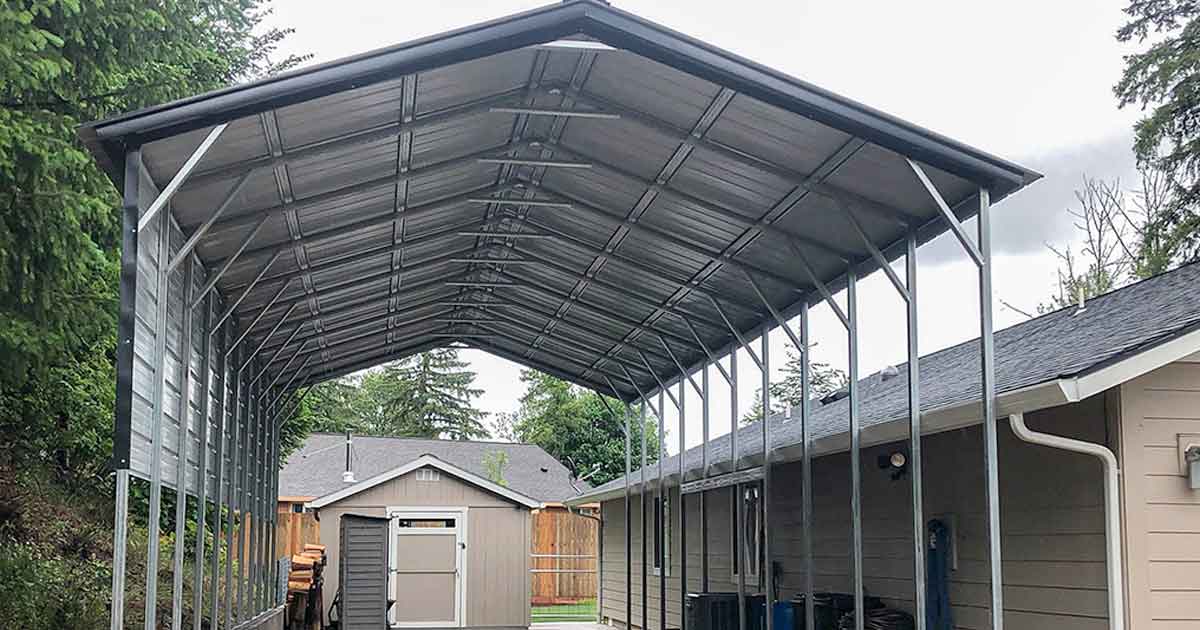
Vertical roof · 12-gauge frame
A runoff-focused package with ridge-to-eave roof panels, hat-channel support, and 12-gauge framing as standard. Bracing, anchors, and engineering depend on the building and site.
Vertical panels run from ridge to eave over steel hat-channel supports, creating a direct path for roof runoff and loose debris.
Engineering when the project or jurisdiction requires it · Side and end enclosure options by configuration · Additional height for RV accessories and slide-outs · Wainscot and two-tone color options
1. Compare Sierra: Choose the peaked boxed-eave profile when it fits the look and panel direction you want.
2. Compare Valley: Consider the rounded regular roof for straightforward open coverage, then review the example prices for your size.
3. Compare Elite: Consider a vertical roof with 12-gauge framing when its panel direction and frame package fit your vehicle, structure, and site requirements.
💡 When you request a quote: Ask about a 12-gauge framing option with any roof profile. The final gauge, bracing, and anchors depend on the selected building and site.
Measure the widest vehicle or equipment first, then add clearance for doors, mirrors, walkways, turning access, and future use.
These are planning examples. Final pricing varies by location, size, roof style, gauge, permits, site conditions, and selected options.
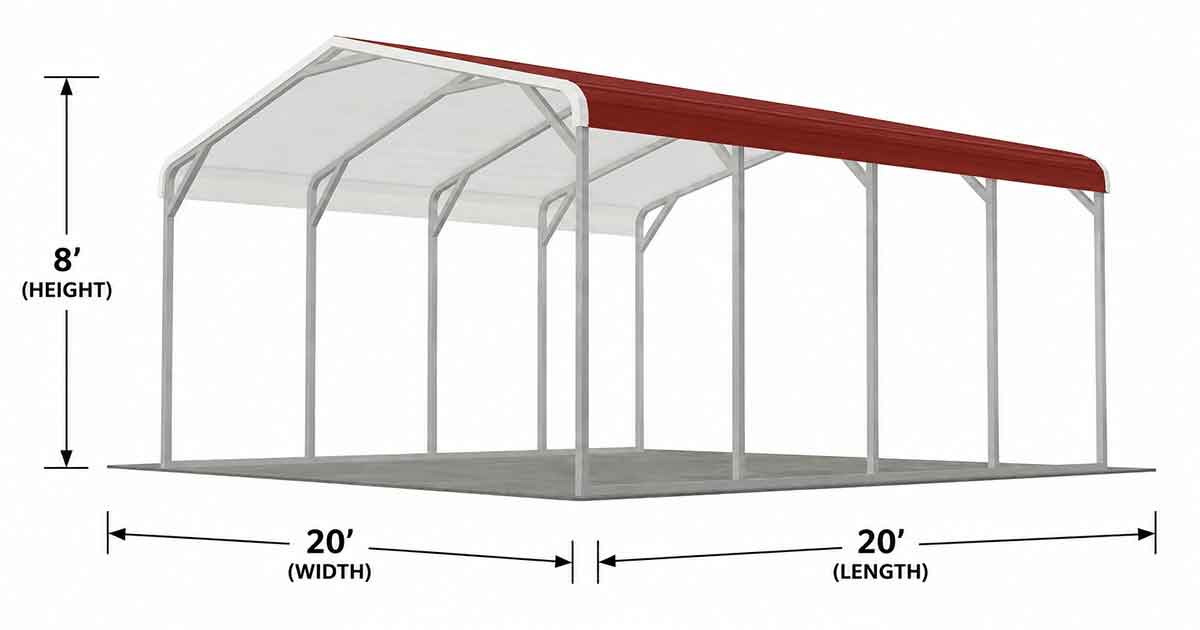
Open Carport
Example price
$3,502
Valley Series · Standard · 14-Gauge · Open sides4 five-foot support bays
Inspect this build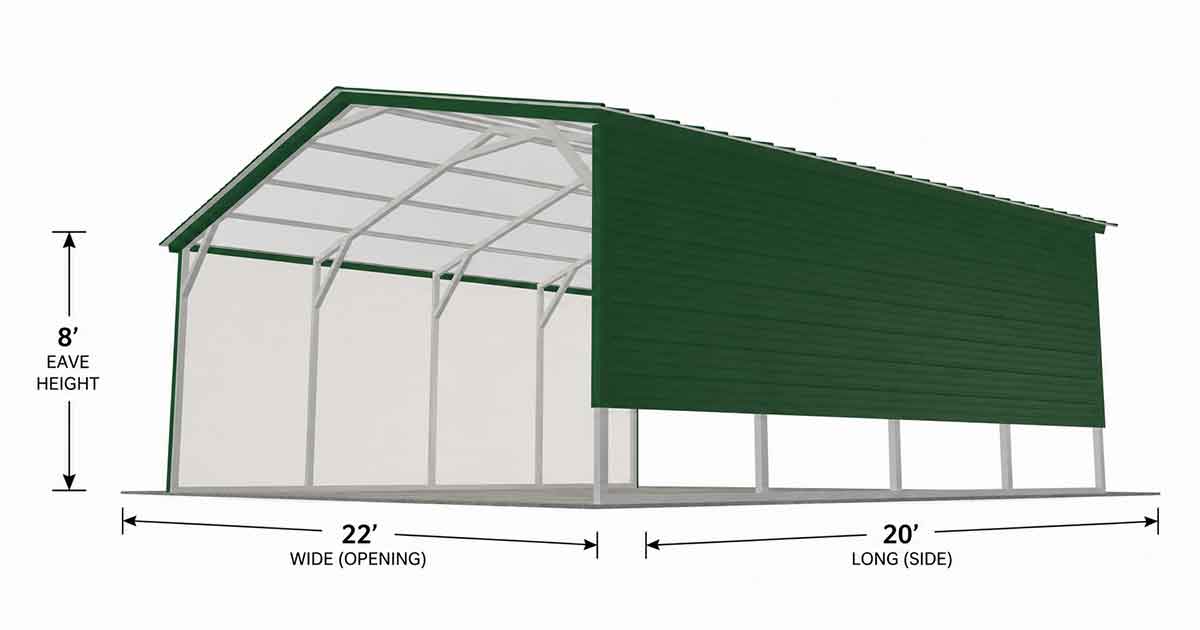
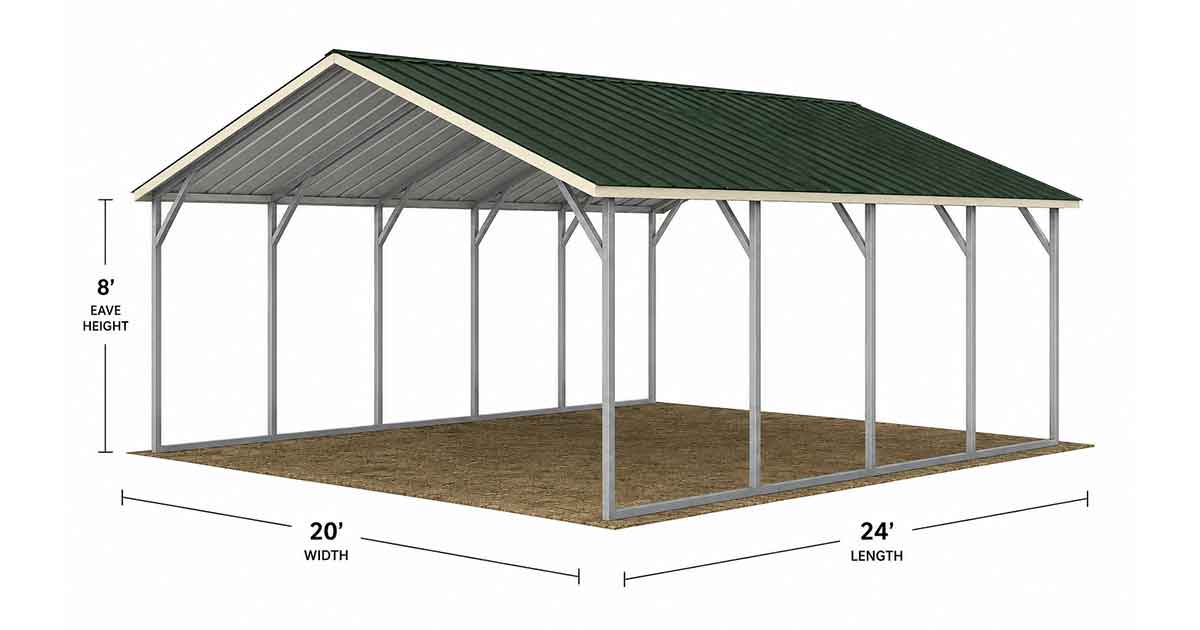
| Building example | What this build shows | Example price |
|---|---|---|
| Open Carport20' x 20' x 8'A 20x20 standard roof carport example with open sides and ends for straightforward two-vehicle or equipment coverage. | Valley SeriesStandard14-GaugeOpen sides 4 five-foot support bays | $3,502 Inspect build |
| Carport22' x 20' x 8'A 22x20 vertical roof carport example with full-height coverage on one side and six-foot coverage on the other for added weather protection without closing the ends. | Vertical14-GaugeOpen sides | $5,767 Inspect build |
| Carport20' x 24' x 8'A 20x24 open-sided vertical roof carport example with an eight-foot eave, concrete anchors, and a 14-gauge frame. | Vertical14-GaugeOpen sides | $5,911 Inspect build |
Still comparing options?
Send us the vehicle or equipment dimensions, ZIP code, and surface. We can point you toward a practical starting size.
Ask for a recommendationStart with the widest vehicle, trailer, or equipment and add clearance for doors, mirrors, walkways, turning access, and future use. A single vehicle often starts around 12 to 18 feet wide; two vehicles commonly need 20 to 24 feet.
Yes! If you prefer to assemble the structure yourself, request our DIY Materials Drop-Off option to receive a 10% discount off the standard installed price.
Standard is the value option for straightforward coverage. Horizontal A-frame adds a more residential roofline. Vertical is commonly considered for longer buildings, tree debris, snow, and stronger runoff performance.
Yes, but height, width, turning access, mirrors, roof AC units, antennas, hitches, and loading clearance must be planned before pricing. Taller or longer uses often need a vertical roof and extra height.
No, Norcal Carports does not pour concrete or do excavation. We install on your prepared, level surface (concrete pad, piers, asphalt, gravel, or dirt) with appropriate anchors.
Yes. Delivery and installation are free on most projects when the site is ready, level, clear, accessible, and suitable for the selected anchoring. Very large buildings may have a freight charge. Final conditions are confirmed during quoting.
Permit requirements vary across Northern California by city or county, structure size, placement, foundation, enclosure, wind or snow loads, intended use, and HOA rules. Confirm the local requirements with the applicable building department before ordering or installation. The customer is responsible for permit applications, permit fees, zoning and setback confirmation, and coordinating required inspections with the applicable city or county. Engineering is conditional, not included with every building. If a city, county, HOA, or inspector requests it, Norcal Carports may coordinate available engineering information or a quote from A&A Engineering.
Send the size, installation ZIP code, surface, and site conditions. We will review the project details and confirm the next step.