
Anchoring Systems
Explains ground anchors vs concrete anchors and how each performs under wind and load conditions.
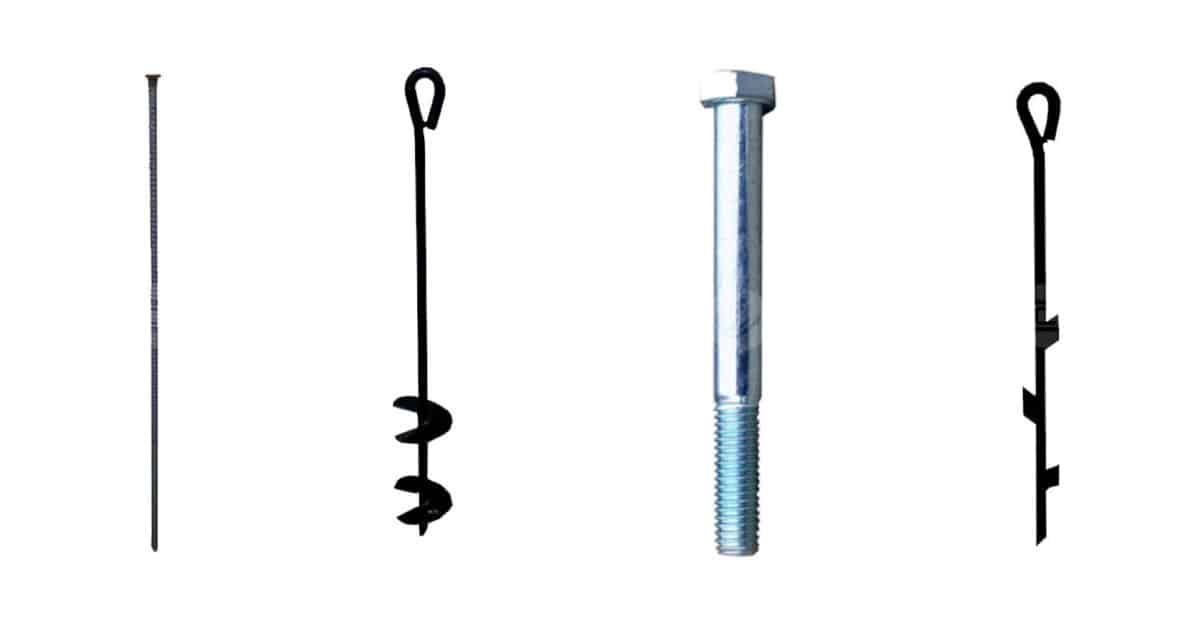
Carport Anchoring Systems: Securing Your Investment
The strength of a metal building is only as good as its connection to the ground. In Northern California, where wind gusts and seismic activity are factors, selecting the correct anchoring system is critical for structural compliance and safety.
1. Concrete Expansion Anchors (Wedge Anchors)
If your carport is being installed on a 4-inch or thicker concrete slab, we use industrial wedge anchors.
- Best for: Enclosed garages and buildings on level concrete.
- How it works: A hole is drilled through the base rail into the concrete, and the anchor is hammered in and tightened to create a permanent mechanical bond.
2. Rebar Anchors (Pin Anchors)
For ground or gravel installations, rebar anchors provide basic temporary stability.
- Best for: Standard carports in low-wind areas with stable soil.
- Limitation: These do not provide significant uplift resistance and are rarely used in certified high-wind or snow load projects.
3. Mobile Home Anchors (Helical Anchors)
Certified carports installed on dirt or gravel require mobile home anchors to meet California wind load requirements.
- Best for: RV covers and certified structures not on concrete.
- How it works: A large screw-like anchor is augered deep into the ground, often 30+ inches, to resist uplift during wind events.
4. Asphalt Anchors
Specifically designed for the porous and flexible nature of asphalt. These anchors are longer and have specific threading to prevent pull-out that standard concrete anchors would suffer on asphalt.
Warning: Using the wrong anchor for your ground type can void your warranty and jeopardize the safety of your property.

Michael Ruiz
Founder & Steel Structures Expert Northern California
Michael Ruiz started Norcal Carports to help customers compare steel-building options, prepare accurate order details, and coordinate delivery and installation with the manufacturer.
Buyer Path
What to Compare Next
This keeps the path moving from research into product fit, local requirements, and quote readiness.
Permit
Permit Requirements
Check how local approval can change structure size, placement, foundation, and drawings.
Engineering
Plans & Engineering Calculations
Review when site-specific calculations may be needed for wind, snow, or larger buildings.
Example
32 x 20 x 10 Wide Span Carport
Compare a larger concrete-anchor example where surface planning matters.
Install
Delivery & Installation
Make sure the site is accessible, level, cleared, and ready for the crew.
Expert Engineering Insight
"When a project or local jurisdiction requires engineering, the ordered configuration can be reviewed for the applicable wind, snow, anchoring, and site criteria before manufacturing."
Other Foundations & Anchoring Resources
Compare concrete, gravel, anchoring, drainage, and site-prep requirements before installing a metal carport in California.
Photo reference gallery showing diagonal bracing, wall bracing, and reinforcement details used in steel structures.
Explains Best National Carports warranty coverage, common terms, exclusions, and claim preparation.
Quote Readiness
Match the Quote to the Surface
Use this guide to narrow the project details, then send the details that let us quote the real site instead of a generic package.