
Carport Foundation Requirements: Slab, Gravel & Anchors
Compare concrete, gravel, anchoring, drainage, and site-prep requirements before installing a metal carport in California.
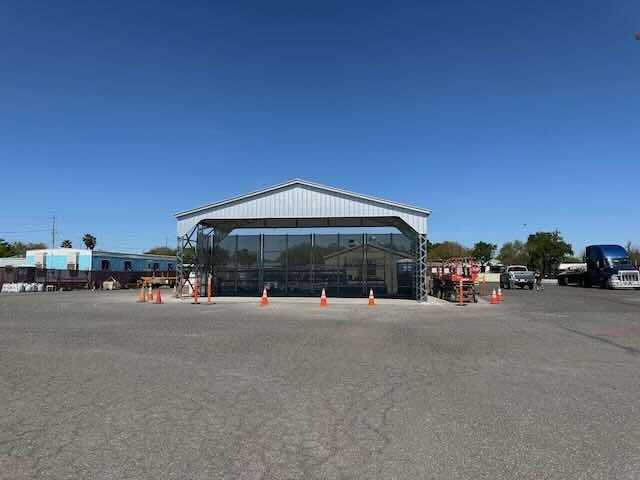
Concrete Foundation Requirements for Metal Carports and Steel Buildings
A solid foundation is the literal base of a long-lasting metal building. Whether you are planning a carport slab, a concrete slab for a metal garage, a slab foundation for an RV carport, or concrete footing requirements for a steel building, the foundation must support the structure and provide enough anchor edge distance for safe installation.
Norcal Carports coordinates the order with the manufacturer, and Best National Carports performs manufacturer delivery and installation. Neither company performs the customer’s excavation, grading, foundation, or concrete work as part of standard installation.
Preparing the foundation is a separate step that must be completed before the manufacturer’s installation crew arrives.
The selected surface should be planned alongside local approval and access. Review carport permit requirements before pouring concrete, then confirm delivery and installation requirements so the site is level, clear, and accessible when the crew is scheduled.
1. Professional Disclaimer: No Construction or Concrete Work
Norcal Carports is the dealer and project-planning contact, not the installation contractor. The following customer site-preparation services are not included:
- Excavation or grading
- Concrete pouring or footer digging
- Permit filing for foundation work
- Removal of existing structures or debris
Homeowners are encouraged to hire a local licensed concrete contractor or foundation specialist to prepare the site according to their engineering requirements.
Important Notice: Any foundation poured prior to building department approval of generic plans is considered "by others" and may no longer be certifiable by the engineer of record. Local approval, site-specific conditions, frost depth, soil conditions, and final engineering requirements always supersede generic foundation notes.
2. Accepted Foundation Types
We can install our structures on a variety of surfaces, provided they are level and stable.
A. Concrete Slabs (The Gold Standard)
A full concrete slab is highly recommended for enclosed garages and workshop buildings.
- Requirements: Slabs should be at least 4" thick for standard vehicles.
- Anchor Edge Distance: For a non-flush slab, the slab should extend beyond the building footprint so anchors are not drilled too close to the slab edge.
- Non-Flush Slab Note: A common non-flush slab requirement is for the length and width of the slab to be 6 inches greater than the building footprint, leaving a 3" gap around all four sides for anchor edge distance.
B. Concrete Footings & Piers
If you don't want a full slab, concrete footings or piers can be used to anchor the building's base rails.
- Requirements: Piers must be poured to the depth required by local building codes (often below the frost line).
- Pier layout: Piers must align with the building's frame legs before installation.
C. Gravel Base (Crushed Stone)
A popular and cost-effective option for carports and RV covers.
- Requirements: We recommend at least 4" to 6" of compacted crushed gravel (e.g., 3/4" minus).
- Stability: Gravel must be compacted to prevent the building from shifting or sinking over time.
D. Asphalt
We can install on asphalt driveways using specialized asphalt anchors.
- Note: While asphalt is accepted, it is more flexible than concrete. Over time, heavy buildings may cause some indentation in the asphalt during hot California summers.
E. Dirt (Native Soil)
Base-level installation on native soil is acceptable for standard carports.
- Requirement: Dirt must be firm and compacted. We use long mobile home / helical anchors for stability on dirt.
3. Understanding Non-Flush Slab Foundations
A non-flush concrete slab is designed so the metal building sits in from the outside edge of the slab. This extra concrete around the perimeter gives concrete anchors enough edge distance and reduces the chance of cracking or edge spalling during drilling.
Non-Flush Concrete Slab Foundation Notes
- The length and width of the slab shall be 6 inches greater than the footprint of the building, creating a 3" gap around the building perimeter on all four sides to allow anchor edge distance.
- The depth of the slab turndown footing shall be greater than the frost depth specified by local code.
- Control joints shall be placed to limit maximum slab spans to 20' in each direction.
- Assumed soil bearing capacity is to be a minimum of 1500 PSF.
- Concrete strength is to be a minimum of 2500 PSI at 28 days.
- Notch details at doors shall be provided by the door manufacturer.
- It is the responsibility of the concrete contractor to secure and verify all design details prior to starting any work.
Slab Configuration
- Monolithic concrete slab with turndown footing
- Non-flush slab option
- 3" gap required between building and slab edge
- Final dimensions must match the approved building plans
Why Turndown Footings Matter
A monolithic slab with a turndown footing helps carry loads from the building into the soil while improving perimeter stiffness. In areas with frost depth requirements, the footing depth must be greater than the frost depth specified by local code.
4. Concrete Slab Thickness and Strength Requirements
Concrete slab requirements depend on the structure, vehicle loads, local code, and engineering documents. For many metal carports and steel buildings, the following foundation details are commonly reviewed:
- Concrete Strength: Minimum 2500 PSI at 28 days unless final engineering requires more.
- Soil Bearing: Assumed soil bearing capacity should be at least 1500 PSF unless a geotechnical report or local code requires another value.
- Soil Compaction: Soil below the slab should be properly compacted to reduce settlement and cracking.
- Reinforcement Options: Rebar, wire mesh, fiber reinforcement, or engineered reinforcement may be required depending on slab design.
- Frost Depth: Turndown footings must extend deeper than the frost depth required by your local building department.
5. Anchor Placement Requirements
Metal building anchor requirements are tied to wind speed, enclosure type, post spacing, concrete edge distance, and the approved anchorage schedule. Concrete anchors are normally wedge anchors or expansion anchors.
Anchorage Notes
- Anchors are to be concrete wedge or expansion anchors.
- Minimum embedment depth shall be 3".
- Minimum spacing between two adjacent anchors shall be 4".
- Anchors are to be spaced no more than 6" from posts.
- Refer to the approved anchorage schedule for required anchor quantities and sizing.
Additional Anchorage Requirements
- In locations requiring two anchors due to wind loads, one anchor is to be installed on each side of the column post.
- At minimum, one concrete anchor shall be located next to every post and one anchor on either side of openings.
- At minimum, two anchors shall be installed at corners of enclosed buildings with end walls: one on each base rail.
Anchorage Schedule
| Enclosure Type | Wind Speed (MPH) | Anchor Size / Quantity |
|---|---|---|
| Enclosed | 105-135 MPH | (1) 1/2" Ø x 7" |
| Enclosed | 136-180 MPH | (2) 1/2" Ø x 7" |
| Open | 105-135 MPH | (1) 1/2" Ø x 7" |
| Open | 136-180 MPH | (2) 1/2" Ø x 7" |
Important: This schedule is general reference information. Final anchor size, quantity, spacing, and embedment must follow the approved engineering package and local building department requirements.
6. Control Joint Placement
Control joints help reduce random cracking by giving the slab a planned place to move as concrete shrinks, expands, and cures.
- Control joints should be installed according to slab layout.
- Maximum slab spans should generally be limited to 20' in each direction.
- Long, uninterrupted slab sections are more likely to crack randomly.
- Proper joint placement improves long-term maintenance and appearance.
7. The "Level Site" Requirement
Regardless of the material you choose, the site must be level within 3 inches.
- If a site is out of level, the building may "rack," causing doors to bind, trim to misalign, and potential structural instability.
- Sites out of level by more than 3 inches may result in additional on-site labor charges or the crew having to reschedule until the ground is prepared.
8. Underground Hazards
Before any footing is dug or anchor is driven, you must identify all underground utilities.
- Call 811: This is a free service in California that marks your gas, water, and power lines.
- Private Lines: Don't forget to mark private septic lines, well pipes, or irrigation systems that 811 might not track.
Site Tip: If you are unsure which foundation matches your soil type and structure size, consult with a local engineer or your county building department.
9. Foundation Disclaimer
Foundation and concrete requirements vary by city, county, soil condition, frost depth, building size, enclosure type, and wind or snow load requirements.
- Local engineering approval is required where applicable.
- Site-specific conditions can change foundation and anchorage requirements.
- Frost depth and soil conditions vary by county and city.
- Door notches, slab recesses, and opening details should be confirmed with door manufacturers and the approved plans.
- Final engineering supersedes generic details.
Need Help Planning Your Foundation?
We help customers understand slab sizing requirements, anchor placement, frost depth considerations, engineering preparation, and building permit readiness before installation.
Related Prices & Examples
Foundation planning should match the structure type and intended use. For tall RV coverage, compare the 16 x 40 x 12 vertical RV carport, 18 x 38 x 12 vertical RV carport, and 18 x 40 x 14 vertical RV carport before sizing your pad or ground install. If you are planning enclosed storage, review metal garages and the 12 x 20 x 10 vertical roof garage for slab and anchoring context.
Upload your building dimensions or contact us to discuss your project requirements before pouring concrete.

Michael Ruiz
Founder & Steel Structures Expert Northern California
Michael Ruiz started Norcal Carports to help customers compare steel-building options, prepare accurate order details, and coordinate delivery and installation with the manufacturer.
Buyer Path
What to Compare Next
This keeps the path moving from research into product fit, local requirements, and quote readiness.
Permit
Permit Requirements
Check how local approval can change structure size, placement, foundation, and drawings.
Engineering
Plans & Engineering Calculations
Review when site-specific calculations may be needed for wind, snow, or larger buildings.
Example
32 x 20 x 10 Wide Span Carport
Compare a larger concrete-anchor example where surface planning matters.
Install
Delivery & Installation
Make sure the site is accessible, level, cleared, and ready for the crew.
Expert Engineering Insight
"When a project or local jurisdiction requires engineering, the ordered configuration can be reviewed for the applicable wind, snow, anchoring, and site criteria before manufacturing."
Other Foundations & Anchoring Resources
Explains ground anchors vs concrete anchors and how each performs under wind and load conditions.
Photo reference gallery showing diagonal bracing, wall bracing, and reinforcement details used in steel structures.
Explains Best National Carports warranty coverage, common terms, exclusions, and claim preparation.
Quote Readiness
Match the Quote to the Surface
Use this guide to narrow the project details, then send the details that let us quote the real site instead of a generic package.