
Dimensions Guide
Defines width, length, and leg height based on trucks, trailers, and RVs. Includes clearance calculations for accessories.
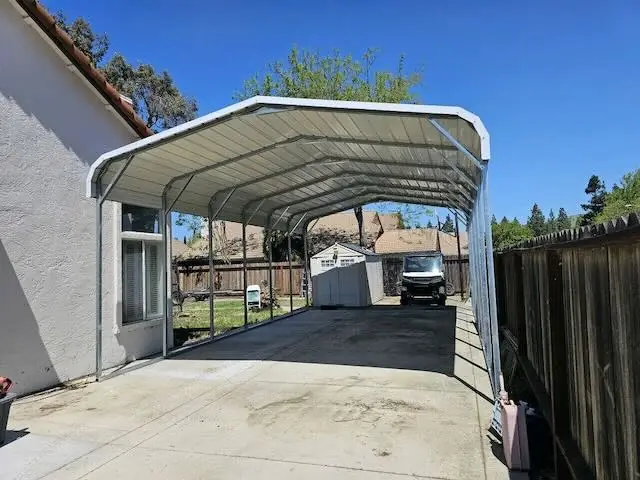
| Width | Best Use Case | Capacity |
|---|---|---|
12' Wide | Single Car, Truck, or SUV | 1 Vehicle |
18' Wide | Two Compact Cars or One Large RV | 1-2 Vehicles |
20' Wide | Two Mid-Size Sedans | 2 Vehicles |
22' Wide | Two Full-Size Cars | 2 Vehicles |
24' Wide | Two Full-Size Trucks, SUVs, or Vans | 2 Vehicles |
26' Wide | Three Compact/Mid-Size Cars | 3 Vehicles |
28' Wide | Three Mid-Size Cars | 3 Vehicles |
30' Wide | Three Full-Size Cars, Trucks, or SUVs | 3 Vehicles |
Pro Tip: Door Swing Clearance
While these dimensions list vehicle capacity, we always recommend measuring your vehicle with the doors open. A 12' wide unit is a tight fit for a full-size truck with extended mirrors.
Metal Building Sizing & Dimensions Guide
Choosing the right size structure starts with vehicle width, door swing, mirror clearance, roof overhang, and walking space. At Norcal Carports, we help calculate width, height, and length around the equipment you need to cover.
Measurement Best Practices
To avoid installation delays or space constraints, keep these three factors in mind:
- Door Swing: Always account for the space needed to fully open your vehicle doors.
- Top-Down Clearance: Measure to the absolute highest point (AC units, antennas).
- Future Use: If you plan on upgrading your vehicle, size your building for the future, not just today.
Utility & Side-Entry Notes
// ...existing code...
- Wide-Span Clearance: Buildings wider than 30' (32' to 60') are engineered for high-capacity storage. For example, a 60' Wide-Span structure can comfortably accommodate a mix of RVs, Boats, and Utility Trailers in a single layout.
- Side-Entry Height: If you are installing roll-up doors on the side (eave) of a building rather than the end (gable), your leg height must be significantly taller than the door height to allow for the door canister and header.
Technical Note: All standard structures are measured by their outer roofline. Check local codes for setback requirements from property lines.
Related Prices & Examples
Use product examples to translate measurements into a buildable starting point. For RV clearance, compare the 16 x 40 x 12 vertical RV carport, 18 x 38 x 12 vertical RV carport, and 18 x 40 x 14 vertical RV carport. If you are planning enclosed storage, the 12 x 20 x 10 vertical roof garage is a useful reference for leg height, door planning, and usable interior space.

Michael Ruiz
Founder & Steel Structures Expert Northern California
Michael Ruiz started Norcal Carports to help customers compare steel-building options, prepare accurate order details, and coordinate delivery and installation with the manufacturer.
Buyer Path
What to Compare Next
This keeps the path moving from research into product fit, local requirements, and quote readiness.
Product
RV Covers & Motorhome Carports
Move from measurements into the existing RV cover product path.
Example
16 x 40 x 12 Vertical RV Carport
Compare a common long RV cover example with 12-foot legs.
Example
18 x 40 x 14 Vertical RV Carport
Use this taller example when AC units, antennas, or extra clearance matter.
Prep
Delivery & Installation
Confirm site access, working room, surface readiness, and install-day expectations.
Expert Engineering Insight
"When a project or local jurisdiction requires engineering, the ordered configuration can be reviewed for the applicable wind, snow, anchoring, and site criteria before manufacturing."
Other Buying a Carport Resources
Quote Readiness
Check Fit Before Pricing
Use this guide to narrow the project details, then send the details that let us quote the real site instead of a generic package.