
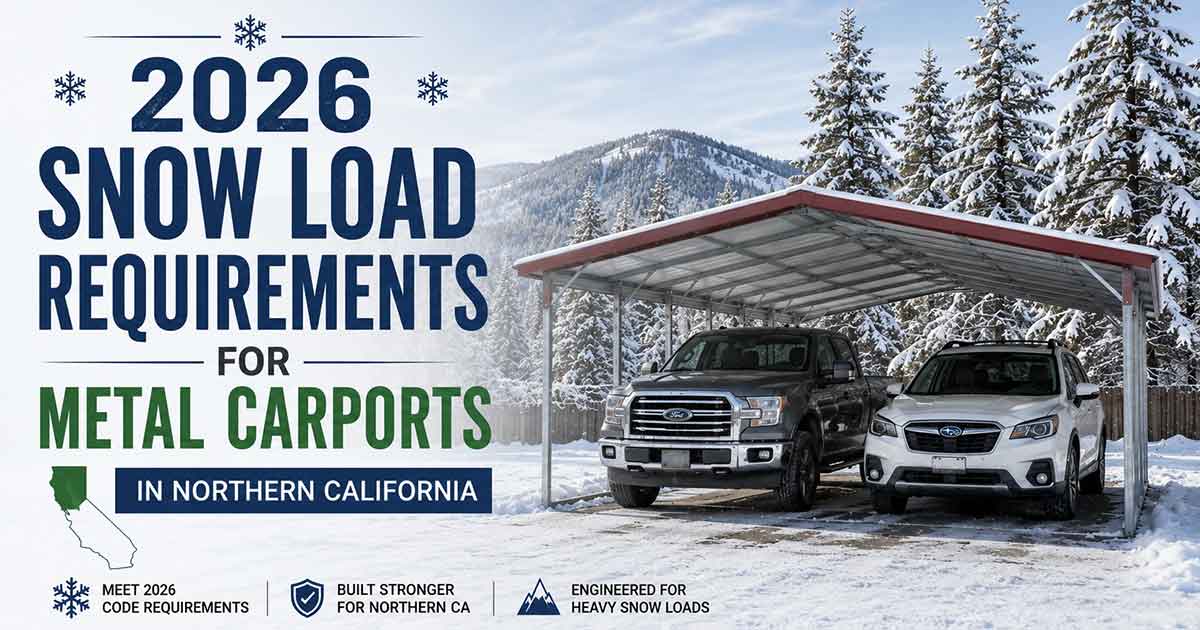
2026 Snow Load Requirements for Metal Carports
This guide reflects 2026-era snow load practices for metal carports, garages, and buildings throughout Northern California. For a deeper breakdown of regional load requirements, see our snow load resource guide.
Snow load requirements are not static. Counties routinely update how snow loads are assigned, interpreted, and enforced as building codes evolve and historical snowfall data is reviewed.
Using outdated snow load information can lead to permit revisions or delays. Some projects also require engineering documentation, which is outlined in our plans and calculations guide.
How Snow Load Is Determined for a Specific Property
Snow load is not assigned using a single statewide chart. In practice, building departments determine snow load based on several property-specific factors:
- Parcel elevation
- Local snowfall history
- Roof slope and configuration
- Freestanding vs. attached construction
- Exposure to wind and drifting
- Adjacent buildings or terrain
Because of this, snow load requirements can vary even between nearby properties.
Why Snow Load Requirements Change Over Time
- New California Building Code adoptions
- Updated engineering standards
- County amendments and clarifications
- Revised snowfall and climate data
- Changes in plan check enforcement
A design approved in a prior code cycle may not meet current requirements.
Northern California Counties With Snow Load Requirements
Snow load verification is commonly required in the following counties depending on elevation and location:
- Alpine, Mono, Sierra, Plumas, Lassen
- Placer, El Dorado, Nevada
- Amador, Calaveras, Tuolumne
- Shasta, Siskiyou, Modoc, Butte (upper elevations)
- Sacramento, Yolo, Solano, San Joaquin, Stanislaus, Merced, Lake, Mendocino, Humboldt, Del Norte (limited zones)
In these areas, permit approval may depend on verified snow loads and engineering submittals. The applicable jurisdiction determines what the project must provide.
Why Snow Load Directly Impacts Pricing
Snow load requirements change the entire structural system, not just the roof.
1. Double-Leg Posts Instead of Single Posts
In higher snow load regions, building departments often require double-leg posts rather than single vertical columns.
- Increases vertical load capacity
- Reduces bending stress at the base
- Improves resistance to uneven snow accumulation
- Distributes loads more evenly into the foundation
This requirement increases steel usage, fabrication time, and installation complexity.
2. Additional Structural Bracing
Higher snow loads require increased bracing throughout the structure, including:
- Diagonal knee bracing
- Additional roof bracing
- Tighter framing spacing
- Reinforced connection points
Wet snow applies sustained downward pressure, making bracing critical for long-term performance.
3. 26-Gauge Roofing vs. 29-Gauge Roofing
As snow load increases, designs commonly require 26-gauge panels instead of 29-gauge.
- Greater resistance to deflection
- Improved fastener performance
- Reduced long-term fatigue
- Increased roof stiffness
This change affects both material cost and structural durability.
Why Lean-To and Attached Carports Cost More
Lean-to and attached carports are reviewed more strictly because snow can drift and accumulate where roofs meet. These conditions often trigger higher design loads, additional bracing, and engineering review.
Why "Standard Prices" Often Don’t Apply
Many advertised carport prices assume single-leg posts, minimal bracing, and 29-gauge roofing with no engineering review. In Northern California snow zones, those assumptions frequently do not meet permit requirements.
CRITICAL PRICING DISCLAIMER: In high-snow regions like Shingletown, Placerville, or the Sierra Foothills, structural requirements can cause the total project cost to double or even triple the price of a standard valley carport. This is due to the mandatory use of 12-gauge steel, 2.5-foot bow spacing, and extensive peak/leg bracing required for safety.
Final design requirements are determined by the authority having jurisdiction. Norcal Carports can help identify the snow-load questions to review for the project location before final design and pricing.
If your site is in a foothill, mountain, or exposed rural area, start with the vertical roof carports page and then request a quote with your installation ZIP code. For related planning, compare generic plans vs. site-specific plans before you order.
Buyer Path
Compare Next
Use these existing pages to turn the article idea into product fit, planning details, and a quote path.
Product
RV Covers & Motorhome Carports
Compare the main RV cover product path for height, length, and side-clearance planning.
Guide
RV Storage Guide
Review RV sizing, clearance, roof pitch, and oversized vehicle planning.
Example
18 x 40 x 14 Vertical RV Carport
Use a tall vertical example for motorhome and fifth-wheel quote planning.
Quote
Request an RV Cover Quote
Send RV length, total height, AC units, slide-outs, surface type, and city.

Michael Ruiz
Founder & Steel Structures Expert Northern California
Michael Ruiz started Norcal Carports to help customers compare steel-building options, prepare accurate order details, and coordinate delivery and installation with the manufacturer.
