
Lean-To Structures
Structures attached to buildings or freestanding extensions used to expand coverage without full enclosure.
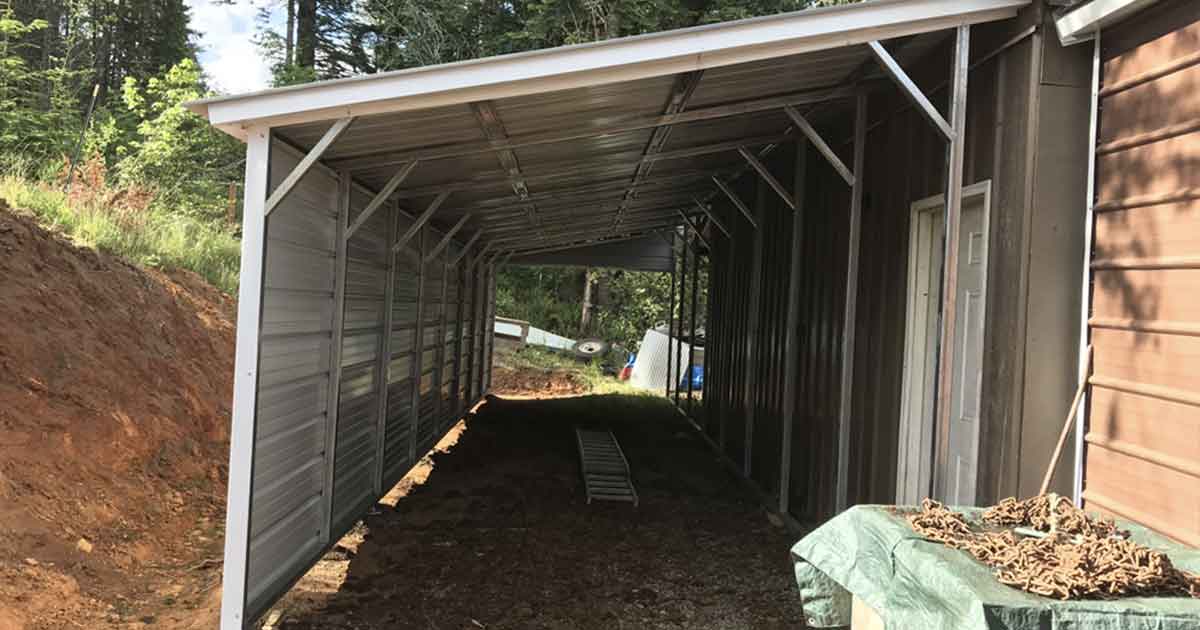
Lean-To Structures & Additions
A lean-to is a single-slope structure that can stand independently, sit beside another building, or attach to a compatible reviewed metal building. Norcal Carports does not attach lean-tos to houses or conventional buildings.
1. Attached vs. Freestanding
- Attached Lean-To: Connected to a compatible metal building sold by Norcal Carports or a similar metal-building system that passes a framing and engineering review. Attachments to houses and conventional buildings are not available.
- Freestanding Lean-To: Built as a separate structure with its own legs on both sides, often placed right up against another building.
2. Popular Use Cases
- Farm Equipment: Adding a covered run to an existing barn for tractors or trailers.
- Patio Covers: Creating a shaded outdoor living space off the side of a house.
- RV Extensions: Adding a tall lean-to to a garage to house a motorhome.
3. Engineering Challenges
Because a lean-to depends on the height and stability of its anchor point (if attached), specific engineering is required.
- Snow Drift: Snow can pile up in the "valley" where a lean-to meets a building. We reinforce these areas with extra bracing.
- Wind Uplift: Single-slope roofs can act like a wing; proper anchoring is critical.
4. Custom Slopes
We can match the pitch of your existing roof to ensure a seamless look and proper water runoff management.

Michael Ruiz
Founder & Steel Structures Expert Northern California
Michael Ruiz started Norcal Carports to help customers compare steel-building options, prepare accurate order details, and coordinate delivery and installation with the manufacturer.
Buyer Path
What to Compare Next
This keeps the path moving from research into product fit, local requirements, and quote readiness.
Sizing
Dimensions Guide
Confirm width, length, height, door swing, and future-use clearance.
Product
Metal Carports
Compare open steel coverage options for everyday vehicle and equipment storage.
Example
12 x 20 x 6 Standard Open Carport
Use a compact open carport example as a basic quote starting point.
Quote
Request a Site-Specific Quote
Send dimensions, city, surface, roof style, and exposure concerns.
Expert Engineering Insight
"When a project or local jurisdiction requires engineering, the ordered configuration can be reviewed for the applicable wind, snow, anchoring, and site criteria before manufacturing."
Other Carport & Building Types Resources
Basic coverage structures with lighter framing designed for smaller spans and lower exposure conditions.
Vertical panel orientation improves drainage and reduces long-term stress from debris and water accumulation.
Fully enclosed buildings with wall panels and doors designed for increased protection and structural strength.
Tall-frame structures engineered for motorhomes, boats, and equipment requiring additional height and width.
Clear-span metal structures for large commercial equipment, agricultural parking, and storage without interior posts. Certified engineering plans available.
Quote Readiness
Turn This Guide Into a Quote
Use this guide to narrow the project details, then send the details that let us quote the real site instead of a generic package.