
Covered RV Parking for RV Parks
Northern California has hundreds of RV parks and campgrounds, but many still rely on fully exposed parking pads. For short overnight stays, that may be acceptable. For long-term tenants, premium RV resorts, storage-integrated facilities, and extended-stay communities, uncovered RV parking can become a noticeable weakness in the property.
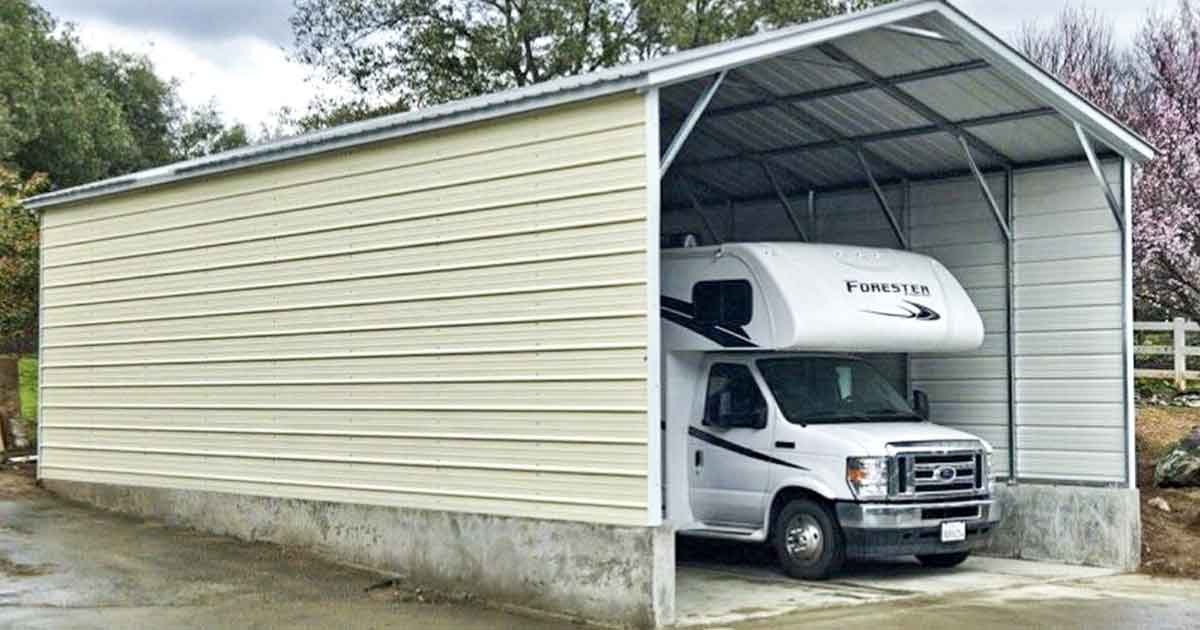
Covered RV parking is not simply an accessory upgrade. In many cases, it becomes part of the long-term infrastructure strategy of the property itself. Properly planned RV carports can help support asset protection, improve the visual quality of the park, create premium parking categories, and provide better protection from Northern California’s varying climate conditions.
Why RV Parks Are Looking at Carports Differently
Modern RVs are expensive vehicles with rooftop air conditioning systems, membrane roofing, solar panels, vents, slide-outs, electronics, and exterior finishes that remain exposed year-round when parked without protection.
In the Sacramento region and Central Valley, prolonged sun and UV exposure can become a serious concern over time. In foothill regions, snow loads and drainage become more important structural considerations. Coastal and Bay Area locations introduce different moisture and corrosion factors that may influence material and installation planning.
The conversation is changing. More RV park operators are beginning to look at covered parking not as a cosmetic upgrade, but as a long-term infrastructure improvement tied to tenant expectations, property modernization, and premium space positioning.
The RV Park Layouts That Work Best for Covered Parking
Not every campground or RV park is automatically a strong candidate for RV carports. The best fit usually depends on spacing, parking geometry, long-term occupancy patterns, site access, and whether the property has enough room to install structures without interfering with roads, hookups, utilities, or adjacent parking areas.
- Row-Based RV Parks: Parks with organized rows and consistent spacing are generally easier to evaluate for repeated multi-space carport layouts.
- Long-Term RV Communities: Extended-stay parks and semi-permanent RV communities are often better positioned for infrastructure-style improvements.
- Premium RV Resorts: Higher-end RV properties may use covered parking to support a more modern and visually upgraded environment.
- Storage-Integrated Facilities: RV storage facilities and hybrid parks can evaluate covered parking for long-term vehicle protection strategies.
- Central Valley Properties: Open inland properties often have the physical spacing needed for row-based covered RV parking systems.
- Foothill Locations: Foothill parks may require more attention to snow load, roof style, and anchoring conditions.
Northern California Regions Where RV Protection Matters
Northern California is not one uniform climate zone. A structure that works in Sacramento may involve completely different planning considerations in the foothills, Redding region, coastal communities, or higher elevation areas.
- Sacramento Valley: Sacramento-area RV parks often experience prolonged summer heat and strong UV exposure across open parking areas.
- Central Valley: Many Central Valley properties have the spacing and open layouts that lend themselves well to multi-space RV carport systems.
- Redding / Shasta: Northern inland regions may involve different engineering conversations depending on exposure and local conditions.
- Foothill Communities: Foothill properties may require closer attention to roof orientation, framing, anchoring, and drainage planning.
- Bay Area / Coastal: Coastal regions often introduce tighter installation constraints and additional moisture-related considerations.
- Gold Country: Gold Country RV parks often blend seasonal traffic with long-term occupancy and storage-style use cases.
The Long-Term Value of Covered RV Parking
The conversation around RV carports is not only about vehicle protection. For some properties, covered parking becomes part of the broader positioning of the park itself. A property with designated covered spaces may create a more premium environment compared to fully exposed parking layouts.
The actual return depends on engineering requirements, installation cost, occupancy, layout constraints, and local permitting conditions. But the overall trend is clear: more RV owners are placing value on protected parking options for long-term stays.
Norcal Carports evaluates RV park and campground projects around practical site conditions rather than generic sizing assumptions. Height clearance, vehicle movement, anchoring surfaces, roof orientation, engineering requirements, access limitations, and regional weather conditions all influence the final design approach.
If you operate an RV park, storage yard, or long-term campground, start with the RV carports page and request a quote with the number of spaces, target clearance, and site layout. For a related commercial storage angle, compare metal carports for small businesses.
Buyer Path
Compare Next
Use these existing pages to turn the article idea into product fit, planning details, and a quote path.
Product
RV Covers & Motorhome Carports
Compare the main RV cover product path for height, length, and side-clearance planning.
Guide
RV Storage Guide
Review RV sizing, clearance, roof pitch, and oversized vehicle planning.
Example
18 x 40 x 14 Vertical RV Carport
Use a tall vertical example for motorhome and fifth-wheel quote planning.
Quote
Request an RV Cover Quote
Send RV length, total height, AC units, slide-outs, surface type, and city.

Michael Ruiz
Founder & Steel Structures Expert Northern California
Michael Ruiz started Norcal Carports to help customers compare steel-building options, prepare accurate order details, and coordinate delivery and installation with the manufacturer.